Sauna Rituals (Löyly)
In Finnish winter culture, the wood-fired smoke sauna is not a luxury spa treatment, but a spiritual and physical cleanser that maintains circulation throughout the frigid winter months.
At the Arctic Circle, midwinter is not a celebration of bustling market squares, but an exercise in communal endurance, quiet reflection, and adaptation to extreme sub-zero conditions.
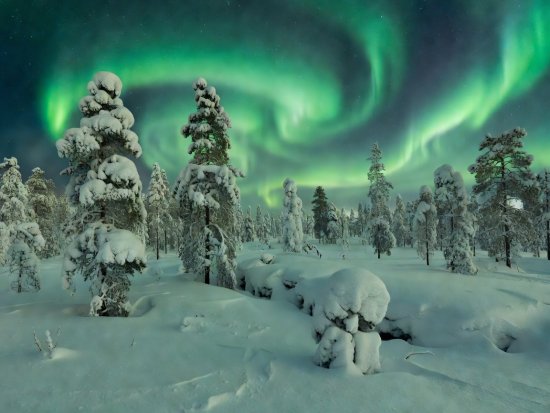
In Finnish Lapland, the sun ceases to rise above the horizon for weeks during December. This period, known in Finnish as kaamos, casts an unbroken twilight across snow-burdened taiga forests. Far from being dreary, this quiet blue light creates a sanctuary for cold-climate woodcraft, open-fire cooking, and deep thermal architecture.
In Rovaniemi and the surrounding wilderness around Ounasvaara and Lake Norvajärvi, midwinter community centers on the kota—a traditional conical timber shelter derived from indigenous dwelling structures. With a stone hearth at its center, the kota provides thermal refuge where travelers drink hot sweetened lingonberry tea and roast sausages over dry birch flames.
Arctic craftsmanship prioritizes durability and thermal retention. Local woodcarvers use curly birch (visakoivu) to carve kuksa—drinking cups polished solely with natural mineral oil. Reindeer antler, naturally shed each winter, is shaped into knife handles and needle cases, illustrating an enduring relationship with northern wildlife that avoids environmental waste.
Reaching the high latitudes without commercial air travel remains one of Europe's classic winter journeys. The Finnish state railway (VR) operates the double-decker Santa Claus Express overnight sleeper from Helsinki Central Station directly to Rovaniemi and Kemijärvi.
As the locomotive pushes past Oulu and enters the Arctic Circle, temperatures regularly fall to minus twenty-five degrees Celsius. The carriages utilize specialized undercarriage heating to prevent freeze-ups on bogie springs and brakes, providing passengers with warm cabins overlooking uninterrupted miles of moonlit snowfields.
In Finnish winter culture, the wood-fired smoke sauna is not a luxury spa treatment, but a spiritual and physical cleanser that maintains circulation throughout the frigid winter months.
Reindeer herds wander freely across northern provinces. Arctic guidelines mandate keeping a respectful distance of at least thirty meters to prevent stress during harsh grazing periods.
Rather than complete darkness, polar twilight delivers a four-hour band of rose-tinted, cobalt blue light between 10:30 and 14:30, reflecting off deep snowpack to illuminate trails.
Venturing north of 66°N in December or January requires rigorous thermal preparation. Standard city overcoats are completely insufficient against the rapid onset of windchill.

Wicks sweat away from the skin. Synthetic and cotton garments retain moisture, rapidly inducing dangerous hypothermia when resting outdoors.

Rubber lug soles that do not freeze rigid on solid ice. Boots must be sized one full size up to allow unrestricted circulation around heavy wool socks.

Individual fingers lose heat rapidly. High-latitude travelers use thin merino touch liners under heavy leather or beaver-fur outer mittens.
Your privacy choices Some cookies are needed for the site to work. Others help us understand how it is used. You can change your choice later. More about cookies